Prepare for Mass

Seek ye first the kingdom of God, and his righteousness; and all these things shall be added unto you. – Mt 6:33

  • Subscribe

  • Next Sunday

  • Spin the Tee for Totally Random Post


  • Hear My Voice

    Download a children's coloring page for this week's Mass Gospel Reading
    Children's book to help "Prepare for Mass" Preview sample pages from the book and read reviews. If you like it, please go back to PrepareforMass and order it directly from the link.
    "Religion is not a Technology!" - There needs to be a personal relationship there. - Father Ted Tyler
  • Prepare for Mass now on Twitter

  • Twitter Updates

  • Listen to the readings

    11-8-2009

    Next Sunday is the 32nd Sunday in Ordinary Time Year B

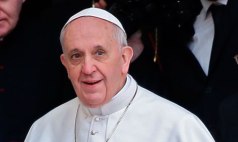
    ENCYCLICAL LETTER CARITAS IN VERITATE OF THE SUPREME PONTIFF BENEDICT XVI

    INTRODUCTION

    1. Charity in truth, to which Jesus Christ bore witness by his earthly life and especially by his death and resurrection, is the principal driving force behind the authentic development of every person and of all humanity. Love — caritas — is an extraordinary force which leads people to opt for courageous and generous engagement in the field of justice and peace. It is a force that has its origin in God, Eternal Love and Absolute Truth. Each person finds his good by adherence to God's plan for him, in order to realize it fully: in this plan, he finds his truth, and through adherence to this truth he becomes free (cf. Jn 8:32). To defend the truth, to articulate it with humility and conviction, and to bear witness to it in life are therefore exacting and indispensable forms of charity. Charity, in fact, “rejoices in the truth” (1 Cor 13:6). All people feel the interior impulse to love authentically: love and truth never abandon them completely, because these are the vocation planted by God in the heart and mind of every human person. The search for love and truth is purified and liberated by Jesus Christ from the impoverishment that our humanity brings to it, and he reveals to us in all its fullness the initiative of love and the plan for true life that God has prepared for us. In Christ, charity in truth becomes the Face of his Person, a vocation for us to love our brothers and sisters in the truth of his plan. Indeed, he himself is the Truth (cf. Jn 14:6).

    2. Charity is at the heart of the Church's social doctrine. Every responsibility and every commitment spelt out by that doctrine is derived from charity which, according to the teaching of Jesus, is the synthesis of the entire Law (cf. Mt 22:36- 40). It gives real substance to the personal relationship with God and with neighbour; it is the principle not only of micro-relationships (with friends, with family members or within small groups) but also of macro-relationships (social, economic and political ones). For the Church, instructed by the Gospel, charity is everything because, as Saint John teaches (cf. 1 Jn 4:8, 16) and as I recalled in my first Encyclical Letter, “God is love” (Deus Caritas Est): everything has its origin in God's love, everything is shaped by it, everything is directed towards it. Love is God's greatest gift to humanity, it is his promise and our hope.

    I am aware of the ways in which charity has been and continues to be misconstrued and emptied of meaning, with the consequent risk of being misinterpreted, detached from ethical living and, in any event, undervalued. In the social, juridical, cultural, political and economic fields — the contexts, in other words, that are most exposed to this danger — it is easily dismissed as irrelevant for interpreting and giving direction to moral responsibility. Hence the need to link charity with truth not only in the sequence, pointed out by Saint Paul, of veritas in caritate (Eph 4:15), but also in the inverse and complementary sequence of caritas in veritate. Truth needs to be sought, found and expressed within the “economy” of charity, but charity in its turn needs to be understood, confirmed and practised in the light of truth. In this way, not only do we do a service to charity enlightened by truth, but we also help give credibility to truth, demonstrating its persuasive and authenticating power in the practical setting of social living. This is a matter of no small account today, in a social and cultural context which relativizes truth, often paying little heed to it and showing increasing reluctance to acknowledge its existence.

    3. Through this close link with truth, charity can be recognized as an authentic expression of humanity and as an element of fundamental importance in human relations, including those of a public nature. Only in truth does charity shine forth, only in truth can charity be authentically lived. Truth is the light that gives meaning and value to charity. That light is both the light of reason and the light of faith, through which the intellect attains to the natural and supernatural truth of charity: it grasps its meaning as gift, acceptance, and communion. Without truth, charity degenerates into sentimentality. Love becomes an empty shell, to be filled in an arbitrary way. In a culture without truth, this is the fatal risk facing love. It falls prey to contingent subjective emotions and opinions, the word “love” is abused and distorted, to the point where it comes to mean the opposite. Truth frees charity from the constraints of an emotionalism that deprives it of relational and social content, and of a fideism that deprives it of human and universal breathing-space. In the truth, charity reflects the personal yet public dimension of faith in the God of the Bible, who is both Agápe and Lógos: Charity and Truth, Love and Word.

    4. Because it is filled with truth, charity can be understood in the abundance of its values, it can be shared and communicated. Truth, in fact, is lógos which creates diá-logos, and hence communication and communion. Truth, by enabling men and women to let go of their subjective opinions and impressions, allows them to move beyond cultural and historical limitations and to come together in the assessment of the value and substance of things. Truth opens and unites our minds in the lógos of love: this is the Christian proclamation and testimony of charity. In the present social and cultural context, where there is a widespread tendency to relativize truth, practising charity in truth helps people to understand that adhering to the values of Christianity is not merely useful but essential for building a good society and for true integral human development. A Christianity of charity without truth would be more or less interchangeable with a pool of good sentiments, helpful for social cohesion, but of little relevance. In other words, there would no longer be any real place for God in the world. Without truth, charity is confined to a narrow field devoid of relations. It is excluded from the plans and processes of promoting human development of universal range, in dialogue between knowledge and praxis.

    5. Charity is love received and given. It is “grace” (cháris). Its source is the wellspring of the Father's love for the Son, in the Holy Spirit. Love comes down to us from the Son. It is creative love, through which we have our being; it is redemptive love, through which we are recreated. Love is revealed and made present by Christ (cf. Jn 13:1) and “poured into our hearts through the Holy Spirit” (Rom 5:5). As the objects of God's love, men and women become subjects of charity, they are called to make themselves instruments of grace, so as to pour forth God's charity and to weave networks of charity.

    This dynamic of charity received and given is what gives rise to the Church's social teaching, which is caritas in veritate in re sociali: the proclamation of the truth of Christ's love in society. This doctrine is a service to charity, but its locus is truth. Truth preserves and expresses charity's power to liberate in the ever-changing events of history. It is at the same time the truth of faith and of reason, both in the distinction and also in the convergence of those two cognitive fields. Development, social well-being, the search for a satisfactory solution to the grave socio-economic problems besetting humanity, all need this truth. What they need even more is that this truth should be loved and demonstrated. Without truth, without trust and love for what is true, there is no social conscience and responsibility, and social action ends up serving private interests and the logic of power, resulting in social fragmentation, especially in a globalized society at difficult times like the present.

    6. “Caritas in veritate” is the principle around which the Church's social doctrine turns, a principle that takes on practical form in the criteria that govern moral action. I would like to consider two of these in particular, of special relevance to the commitment to development in an increasingly globalized society: justice and the common good.

    First of all, justice. Ubi societas, ibi ius: every society draws up its own system of justice. Charity goes beyond justice, because to love is to give, to offer what is “mine” to the other; but it never lacks justice, which prompts us to give the other what is “his”, what is due to him by reason of his being or his acting. I cannot “give” what is mine to the other, without first giving him what pertains to him in justice. If we love others with charity, then first of all we are just towards them. Not only is justice not extraneous to charity, not only is it not an alternative or parallel path to charity: justice is inseparable from charity, and intrinsic to it. Justice is the primary way of charity or, in Paul VI's words, “the minimum measure” of it, an integral part of the love “in deed and in truth” (1 Jn 3:18), to which Saint John exhorts us. On the one hand, charity demands justice: recognition and respect for the legitimate rights of individuals and peoples. It strives to build the earthly city according to law and justice. On the other hand, charity transcends justice and completes it in the logic of giving and forgiving. The earthly city is promoted not merely by relationships of rights and duties, but to an even greater and more fundamental extent by relationships of gratuitousness, mercy and communion. Charity always manifests God's love in human relationships as well, it gives theological and salvific value to all commitment for justice in the world.

    7. Another important consideration is the common good. To love someone is to desire that person's good and to take effective steps to secure it. Besides the good of the individual, there is a good that is linked to living in society: the common good. It is the good of “all of us”, made up of individuals, families and intermediate groups who together constitute society. It is a good that is sought not for its own sake, but for the people who belong to the social community and who can only really and effectively pursue their good within it. To desire the common good and strive towards it is a requirement of justice and charity. To take a stand for the common good is on the one hand to be solicitous for, and on the other hand to avail oneself of, that complex of institutions that give structure to the life of society, juridically, civilly, politically and culturally, making it the pólis, or “city”. The more we strive to secure a common good corresponding to the real needs of our neighbours, the more effectively we love them. Every Christian is called to practise this charity, in a manner corresponding to his vocation and according to the degree of influence he wields in the pólis. This is the institutional path — we might also call it the political path — of charity, no less excellent and effective than the kind of charity which encounters the neighbour directly, outside the institutional mediation of the pólis. When animated by charity, commitment to the common good has greater worth than a merely secular and political stand would have. Like all commitment to justice, it has a place within the testimony of divine charity that paves the way for eternity through temporal action. Man's earthly activity, when inspired and sustained by charity, contributes to the building of the universal city of God, which is the goal of the history of the human family. In an increasingly globalized society, the common good and the effort to obtain it cannot fail to assume the dimensions of the whole human family, that is to say, the community of peoples and nations, in such a way as to shape the earthly city in unity and peace, rendering it to some degree an anticipation and a prefiguration of the undivided city of God.

    8. In 1967, when he issued the Encyclical Populorum Progressio, my venerable predecessor Pope Paul VI illuminated the great theme of the development of peoples with the splendour of truth and the gentle light of Christ's charity. He taught that life in Christ is the first and principal factor of development and he entrusted us with the task of travelling the path of development with all our heart and all our intelligence, that is to say with the ardour of charity and the wisdom of truth. It is the primordial truth of God's love, grace bestowed upon us, that opens our lives to gift and makes it possible to hope for a “development of the whole man and of all men”, to hope for progress “from less human conditions to those which are more human”, obtained by overcoming the difficulties that are inevitably encountered along the way.

    At a distance of over forty years from the Encyclical's publication, I intend to pay tribute and to honour the memory of the great Pope Paul VI, revisiting his teachings on integral human development and taking my place within the path that they marked out, so as to apply them to the present moment. This continual application to contemporary circumstances began with the Encyclical Sollicitudo Rei Socialis, with which the Servant of God Pope John Paul II chose to mark the twentieth anniversary of the publication of Populorum Progressio. Until that time, only Rerum Novarum had been commemorated in this way. Now that a further twenty years have passed, I express my conviction that Populorum Progressio deserves to be considered “the Rerum Novarum of the present age”, shedding light upon humanity's journey towards unity.

    9. Love in truth — caritas in veritate — is a great challenge for the Church in a world that is becoming progressively and pervasively globalized. The risk for our time is that the de facto interdependence of people and nations is not matched by ethical interaction of consciences and minds that would give rise to truly human development. Only in charity, illumined by the light of reason and faith, is it possible to pursue development goals that possess a more humane and humanizing value. The sharing of goods and resources, from which authentic development proceeds, is not guaranteed by merely technical progress and relationships of utility, but by the potential of love that overcomes evil with good (cf. Rom 12:21), opening up the path towards reciprocity of consciences and liberties.

    The Church does not have technical solutions to offer and does not claim “to interfere in any way in the politics of States.” She does, however, have a mission of truth to accomplish, in every time and circumstance, for a society that is attuned to man, to his dignity, to his vocation. Without truth, it is easy to fall into an empiricist and sceptical view of life, incapable of rising to the level of praxis because of a lack of interest in grasping the values — sometimes even the meanings — with which to judge and direct it. Fidelity to man requires fidelity to the truth, which alone is the guarantee of freedom (cf. Jn 8:32) and of the possibility of integral human development. For this reason the Church searches for truth, proclaims it tirelessly and recognizes it wherever it is manifested. This mission of truth is something that the Church can never renounce. Her social doctrine is a particular dimension of this proclamation: it is a service to the truth which sets us free. Open to the truth, from whichever branch of knowledge it comes, the Church's social doctrine receives it, assembles into a unity the fragments in which it is often found, and mediates it within the constantly changing life-patterns of the society of peoples and nations.

    vatican.va

  • Archives

  • RSS Today’s Gospel

  • RSS Homily of the Day

  • RSS Father Dave Dwyer’s Homilies

    • Sunglasses On Your Head October 23, 2009
      Friday of the Twenty-ninth Week in Ordinary Time. Sometimes it is hard for us to see what is right in front of us. Could be our sunglasses right on top of our head, or could it even be God's will, but it happens to all of us from time to time. (Preached on Friday, October 23rd, 2009, 12:15pm, St. Malachyâs Church, Broadway and 49th, Times Square, New Yo […]
    • Wages of Sin October 22, 2009
      Thursday of the Twenty-ninth Week in Ordinary Time. We are reminded in the readings today that indeed we are all sinners, and that "the wages of sin is death." However, there is a silver lining to what seems like this darkest cloud: God in his goodness, promises us an immeasurable bonus of the gift of eternal life. (Preached on Thursday, October 22 […]
    • Do Me A Favor October 18, 2009
    • Yeast in the Dough October 16, 2009
      Friday of the Twenty-eighth Week in Ordinary Time. Father Dave highlights an analogy that is often used in Scripture, particularly by Jesus: yeast. Be aware of those things that may be negative, yet seem small and unaffecting, as these things may start to grow and rise over time.(Preached on Friday, October 16th, 2009, 12:15pm, St. Malachyâs Church, Broadway […]
  • RSS Busted Halo Show – Father Dave Dwyer The Catholic Channel Sirius 159

    • Interview: Pastor Douglas Wilson November 3, 2009
    • Interview: Father Gary Thomas, Vatican-certified exorcist October 30, 2009
    • Interview: Michael Weiss October 20, 2009
      Living with a disease like multiple sclerosis is something many of us cannot imagine, but for some is a part of their everyday life. For Michael Weiss, MS has been a part of his reality since being diagnosed with the disease in 2004. Facing the disease head-on, Mike has spent much of his time in the last five years fundraising and raising awareness for the d […]
    • Interview: Tracie Metzger, Pink Ribbon Bible October 14, 2009
      In honor of October being the 25th anniversary of National Breast Cancer Awareness Month, Father Dave interviews Tracie Metzger, the co-founder of the Pink Ribbon Girls, a nationwide non-profit organization that offers education and awareness of breast cancer. (Originally aired: 10/13/09)
  • Archives

  • RSS SUNDAY SUNDAY SUNDAY

    • Sunday Sunday Sunday: 11/08/09 November 2, 2009
      Readings for the Thirty-Second Sunday in Ordinary Time: 1 Kings 17:10-16; Psalm 146:7, 8-9, 9-10; Hebrews 9:24-28; Mark 12:38-44 or 12:41-44.
    • Sunday Sunday Sunday: 11/01/09 October 26, 2009
      Readings for the Solemnity of All Saints: Revelation 7:2-4, 9-14; Psalm 24:1bc-2, 3-4ab, 5-6; 1 John 3:1-3; Matthew 5:1-12a.
    • Sunday Sunday Sunday: 10/25/09 October 19, 2009
      Readings for the Thirtieth Sunday in Ordinary Time: Jeremiah 31:7-9; Psalm 126:1-6; Hebrews 5:1-6; Mark 10:46-52.
    • Sunday Sunday Sunday: 10/18/09 October 12, 2009
      Readings for The Twenty-Ninth Sunday in Ordinary Time: Isaiah 53:10-11; Psalm 33:4-5, 18-19, 20, 22; Hebrews 4:14-16; Mark 10:35-45 or 10:42-45.
  • SocialVibe


  • Pages

  • Site meta

  • Holy Eucharist

Thirty-second Sunday in Ordinary Time

Posted by Bob Kenward on November 2, 2009

widows-mite1Prepare for Mass

November 8, 2009 – (11/8/2009)
Thirty-second Sunday in Ordinary Time


Sunday November 8 2009 is the Thirty-second Sunday in Ordinary Time Year B

The poor widow’s mite

This poor widow put in more than all the other contributors to the treasury.

For they have all contributed from their surplus, but she, from her poverty, has contributed all she had, her whole livelihood.

Trust in God

Giving all you got

The value of the little one’s work is great in the eyes of God

1 Kgs 17:10-16
Ps 146:7, 8-9, 9-10
Heb 9:24-28
Mk 12:38-44 or 12:41-44

From the First Reading Elijah enounters a poor widow who had scarcely enough to eat for her and her son. “As the LORD, your God, lives, I have nothing baked; there is only a handful of flour in my jar
and a little oil in my jug. Just now I was collecting a couple of sticks, to go in and prepare something for myself and my son; when we have eaten it, we shall die.” Elijah said to her, “Do not be afraid. Go and do as you propose. But first make me a little cake and bring it to me. Then you can prepare something for yourself and your son.

For the LORD, the God of Israel, says,
‘The jar of flour shall not go empty,
nor the jug of oil run dry,
until the day when the LORD
sends rain upon the earth.’”

She left and did as Elijah had said.
She was able to eat for a year, and he and her son as well;
the jar of flour did not go empty,
nor the jug of oil run dry,
as the LORD had foretold through Elijah.
Responsorial Psalm
Praise the Lord, my soul!
The LORD keeps faith forever,
secures justice for the oppressed,
gives food to the hungry.
The LORD sets captives free.
R. Praise the Lord, my soul!

The LORD gives sight to the blind.
The LORD raises up those who were bowed down;
the LORD loves the just.
The LORD protects strangers.
R. Praise the Lord, my soul!

The fatherless and the widow he sustains,
but the way of the wicked he thwarts.
The LORD shall reign forever;
your God, O Zion, through all generations. Alleluia.
R. Praise the Lord, my soul!

2nd Reading
Christ’s one and only sacrifice
…Just as it is appointed that human beings die once,
and after this the judgment, so also Christ,
offered once to take away the sins of many,
will appear a second time, not to take away sin
but to bring salvation to those who eagerly await him.

from the Gospel…
Jesus sat down opposite the treasury
and observed how the crowd put money into the treasury.
Many rich people put in large sums.
A poor widow also came and put in two small coins worth a few cents.

Calling his disciples to himself, he said to them,
“Amen, I say to you, this poor widow put in more
than all the other contributors to the treasury.
For they have all contributed from their surplus wealth,
but she, from her poverty, has contributed all she had,
her whole livelihood.”

GOD BLESS YOU

watch CatholicTV

Mass Preparation for this Sunday

Fr Tommy Lane
St Charles Borromeo Catholic Church – www.scborromeo.org
LifeTeen
Catholic Doors Homilies
Loyola Press Sunday Connection
Homilies and Reflections from Australia

Posted in 32nd Sunday in Ordinary Time, Here's My Life, Prepare for Mass, Preparing for Catholic Mass, Thirty-second Sunday in Ordinary Time, Widow's Mite, catholic, catholicism, christianity, church, faith, give your all, giving, poor widows mite | Tagged: , , , , , , , , , , , , , , , , , , , , | Leave a Comment »

Solemnity of All Saints

Posted by Bob Kenward on October 26, 2009

all_saints_day

Prepare for Mass

November 1, 2009 – (11/1/2009)
All Saints Day

We are all called to be great Saints
Sunday November 1 2009 is the Solemnity of All Saints Year B

A Saint is one who leads a life in union with God through the grace of Christ and receives the reward of eternal life.

Rv 7:2-4, 9-14
Ps 24:1bc-2, 3-4ab, 5-6
1 Jn 3:1-3
Mt 5:1-12a 

The first reading in today’s Mass is from Revelation. 

Then I saw another angel come up from the East, holding the seal of the living God. He cried out in a loud voice to the four angels who were given power to damage the land and the sea, “Do not damage the land or the sea or the trees until we put the seal on the foreheads of the servants of our God.”
- Rev 7:2-3

During the Sacrament of Confirmation, Christ puts his seal on us.

Confirmation

“The seal of the Hholy-spirit-icon-743283oly Spirit

marks our total belonging to Christ,

our enrollment in his service for ever,

as well as the promise of divine protection in the great eschatological trial.


Responsorial Psalm

Lord, this is the people that longs to see your face.

The LORD’s are the earth and its fullness;
the world and those who dwell in it.
For he founded it upon the seas
and established it upon the rivers.
R.        Lord, this is the people that longs to see your face.
Who can ascend the mountain of the LORD?
or who may stand in his holy place?
One whose hands are sinless, whose heart is clean,
who desires not what is vain.
R.        Lord, this is the people that longs to see your face.
He shall receive a blessing from the LORD,
a reward from God his savior.
Such is the race that seeks him,
that seeks the face of the God of Jacob.

Second Reading
See what love the Father has bestowed on us that we may be called the children of God. Yet so we are. The reason the world does not know us is that it did not know him.

Beloved, we are God’s children now;
what we shall be has not yet been revealed.

We do know that when it is revealed we shall be like him,
for we shall see him as he is.
Everyone who has this hope based on him makes himself pure,
as he is pure.


From today’s Gospel, the Beatitudes
“Blessed are the poor in spirit,
for theirs is the Kingdom of heaven.
Blessed are they who mourn,
for they will be comforted.
Blessed are the meek,
for they will inherit the land.
Blessed are they who hunger and thirst for righteousness,
for they will be satisfied.
Blessed are the merciful,
for they will be shown mercy.
Blessed are the clean of heart,
for they will see God.
Blessed are the peacemakers,
for they will be called children of God.
Blessed are they who are persecuted for the sake of righteousness,
for theirs is the Kingdom of heaven.
Blessed are you when they insult you and persecute you
and utter every kind of evil against you falsely because of me.
Rejoice and be glad,
for your reward will be great in heaven.”

GOD BLESS YOU

watch CatholicTV

Mass Preparation for this Sunday

Pope Benedict XVI

Fr Tommy Lane
St Charles Borromeo Catholic Church – www.scborromeo.org
LifeTeen
Catholic Doors Homilies
Loyola Press Sunday Connection
Weekly Wellsprings – wellsprings.org

Posted in All Saints Day, Mass Preparation, Prepare for Mass, Preparing for Catholic Mass, Solemnity of All Saints, Teaching Mass, YEAR B 2009, beatitudes, catholic, catholicism, christianity, church, faith, year b | Tagged: , , , , , , , , , , | 2 Comments »

Thirtieth Sunday in Ordinary Time

Posted by Bob Kenward on October 18, 2009

jesus_healing_a_blind_man

Prepare for Mass

Jer 31:7-9
Ps 126:1-2, 2-3, 4-5, 6
Heb 5:1-6
Mk 10:46-52  The LORD has delivered his people,
the remnant of Israel. 

Behold, I will bring them back
from the land of the north;
I will gather them from the ends of the world,
with the blind and the lame in their midst,
the mothers and those with child;

they shall return as an immense throng.
They departed in tears,
but I will console them and guide them;
I will lead them to brooks of water,
on a level road, so that none shall stumble.
For I am a father to Israel,
Ephraim is my first-born.

The Lord has done great things for us; we are filled with joy.

Every high priest
is taken from among men
and made their representative before God,
to offer gifts and sacrifices for sins.
He is able to deal patiently with the ignorant and erring,
for he himself is beset by weakness
and so, for this reason, must make sin offerings for himself
as well as for the people.

No one takes this honor upon himself
but only when called by God,
just as Aaron was.

In the same way,
it was not Christ who glorified himself in becoming high priest,
but rather the one who said to him:
You are my son:
this day I have begotten you;
just as he says in another place:
You are a priest forever

according to the order of Melchizedek.

As Jesus was leaving Jericho with his disciples and a sizable crowd, Bartimaeus, a blind man, the son of Timaeus,jesus_healing_blindsat by the roadside begging. On hearing that it was Jesus of Nazareth, he began to cry out and say, “Jesus, son of David, have pity on me.”
And many rebuked him, telling him to be silent.
But he kept calling out all the more,
“Son of David, have pity on me.”
Jesus stopped and said, “Call him.”
So they called the blind man, saying to him,
“Take courage; get up, Jesus is calling you.”
He threw aside his cloak, sprang up, and came to Jesus.
Jesus said to him in reply, “What do you want me to do for you?”

The blind man replied to him, “Master, I want to see.”
Jesus told him, “Go your way; your faith has saved you.”
Immediately he received his sight and followed him on the way.


GOD BLESS YOU

watch CatholicTV

Mass Preparation for this Sunday

Father Jim Chern
Fr Tommy Lane
St Charles Borromeo Catholic Church – www.scborromeo.org
LifeTeen
Catholic Doors Homilies
Loyola Press Sunday Connection
Weekly Wellsprings – wellsprings.org

Posted in Bartimaeus, Blind Beggar, Heb 5:1-6, Jer 31:7-9, Mk 10:46-52, Prepare for Mass, Religion, YEAR B 2009, Year B 2008, catholic, catholicism, christianity, church, faith, healing blind man, roman catholic, year b | Tagged: , , , , , , , , , , , , , , , , , , , , , | 1 Comment »

Twenty-ninth Sunday in Ordinary Time

Posted by Bob Kenward on October 13, 2009

Prepare for Mass

“Grant that in your glory we may sit one at your right and the other at your left.”

“You do not know what you are asking…”

throne-of-god

October 18, 2009 – (10/18/2009)

Whoever wishes to be great among you will be your servant; whoever wishes to be first among you will be the slave of all.

“The cup that I drink, you will drink,
and with the baptism with which I am baptized, you will be baptized;
 

but to sit at my right or at my left is not mine to

give

but is for those for whom it has been prepared.”

Jesus Christ, the true high priest,

God’s Throne has become the Throne of grace.


Sunday October 18 2009 is the Twenty-ninth Sunday in Ordinary Time Year B

Is 53:10-11
Ps 33:4-5, 18-19, 20, 22
Heb 4:14-16
Mk 10:35-45 or 10:42-45


GOD BLESS YOU

watch CatholicTV

Mass Preparation for this Sunday

http://www.frtommylane.com/homilies/holy_week/shroud_of_turin.htm
http://www.scborromeo.org/biblestu/b_ot_29.pdf
http://www.lifeteen.com/RSS/podcasts/sunday/LifeTeenPresentsSundaySundaySunday-10_18_09.mp3
http://www.catholicdoors.com/homilies/2009/091018.htm
http://www.loyolapress.com/29th-sunday-in-ordinary-time-b-sunday-connection.htm
http://www.wellsprings.org.uk/weekly_wellsprings/year_b/sunday_29.htm

Posted in 29th Sunday in Ordinary Time, 29th Sunday in Ordinary Time Year B, Glory, Prepare for Mass, Throne of God, Twenty ninth Sunday in Ordinary Time Year B, YEAR B 2009, catholicism, christianity, church, grace, year b | Tagged: , , , , | Leave a Comment »